



Categories
- Blog (23)
- OEM (9)
- Quality Management (2)
Silicone hoses consist of an inner silicone layer, intermediate reinforcement layers and an outer silicone layer.
Every single layer is produced by calendering raw materials.
The calendering process exerts major influences on three key indicators:
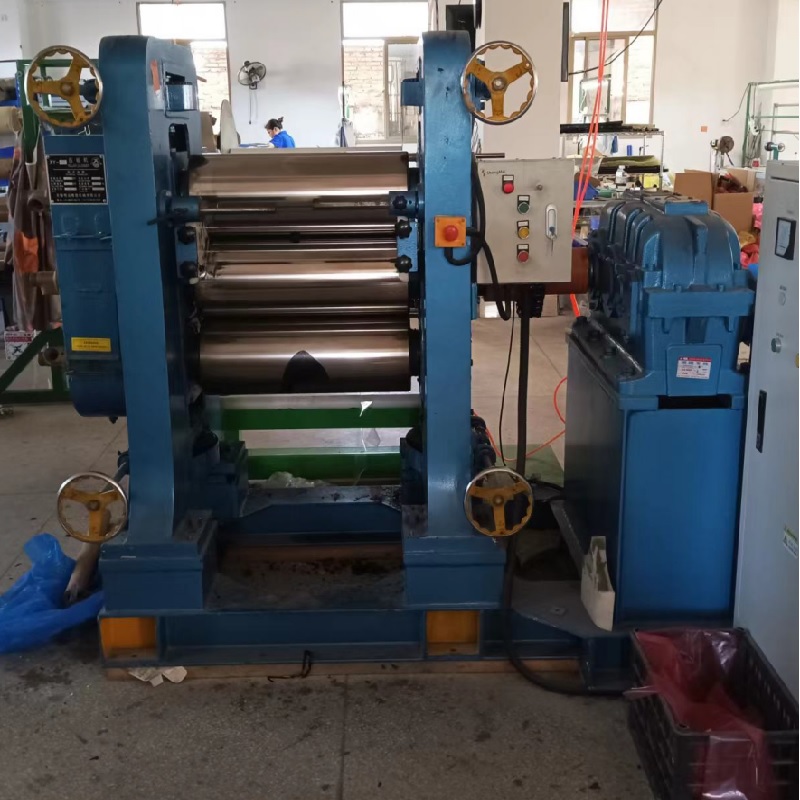
Calender
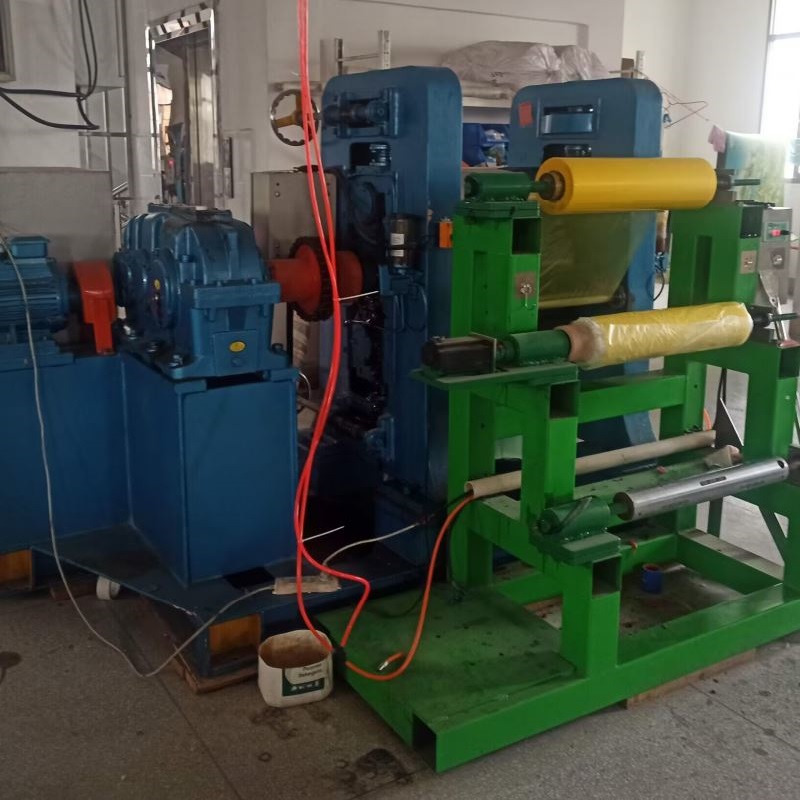
Prepare silicone hose materials
Consistent thickness of calendered silicone sheets and reinforcement substrates is the core of quality management.
Most silicone hoses are structured with two silicone layers plus three or four reinforcement layers.
If calendering thickness fluctuates greatly, thickness tolerances of all silicone and reinforcement layers will stack cumulatively, leading to dimensional deviations of finished hoses.
As a dedicated silicone hose manufacturer, Hotop has gathered abundant practical experience in calender thickness regulation.
Three core variables govern calendered dimensions:
Different raw materials demand distinct roller speeds; pure silicone requires a slower conveying speed than reinforcement composites.
Simply explained, roller speed controls how fast material passes through the calender.
From years of production practice, we set the inverter value to 8 for pure silicone calendering and 20 for reinforcement layer processing.
These tried-and-tested figures fit over 80% of our product range.
We will modify the running speed accordingly when manufacturing ultra-thin calendered sheets.
The clearance between two calender rollers decides the throughput of material.
Prior to mass production, workers must test the thickness of trial calendered sheets with a thickness gauge; formal production can only commence after passing thickness inspection.
Once calendering is underway, roller speed and gap clearance are locked without adjustment.
Operators keep checking sheet thickness with thickness gauges throughout production runs.
If measurements fall within tolerance limits, production carries on.
If readings go out of spec, the calender machine must be shut down for parameter recalibration before restarting.
Adjusting roller speed or roller gap while the machine is running is strictly forbidden — this is the fundamental rule to secure stable calender thickness.
Take-up speed has a relatively minor yet easily ignored effect on final calendered thickness.
We use the material’s exit point off the calender rollers as a benchmark.
To maintain dimensional consistency, this exit position must stay within a proper, steady range at all times.
During reinforcement layer calendering, silicone rubber must fully soak through the mesh fabric to form strong interlayer bonds.
Hotop relies on two straightforward field tests to verify full penetration:
We observe the surface color to clearly identify whether silicone has completely permeated the reinforcement mesh.
Uniform silicone penetration delivers consistent appearance and superior bonding performance.
Operators run the back of their hand over the reverse side of calendered stock:
Calendering is a highly technical operation.
New staff normally complete two weeks of professional training, and only after three months of hands-on practice can they operate the calender skillfully and stably.
To sustain steady calendered thickness across all batches, Hotop compiles fully illustrated calendering work instructions.
Complete process parameters for every type of reinforcement material are recorded in these documents to unify production standards and operating guidance.